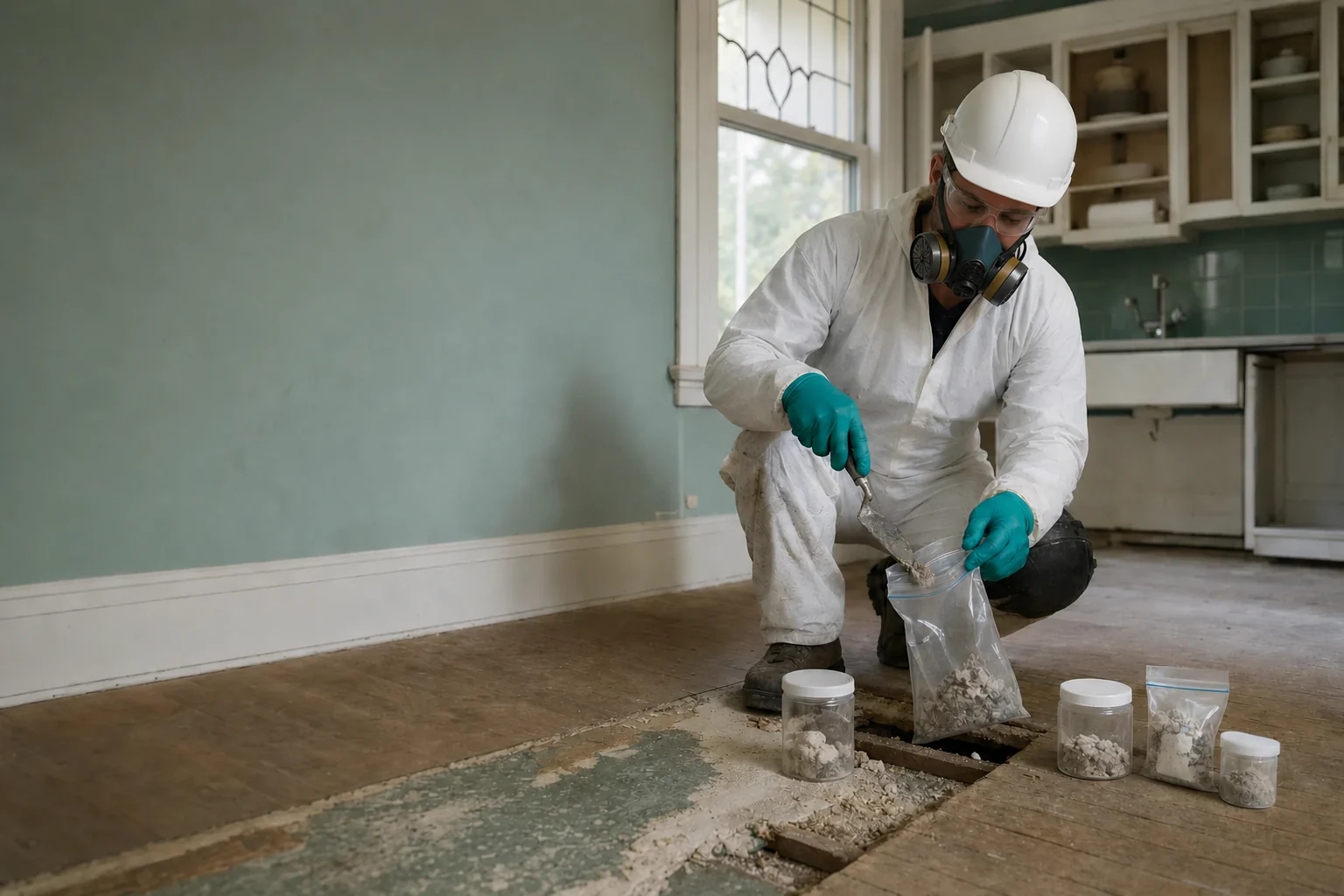
A qualified surveyor inspects, samples and documents suspect materials so your report is ready for permit and contractor review in Vancouver.
- Professional testing
- Third-party laboratory analysis
- Results in 1 to 2 business days
What is included in hazmat survey
Thorough. Professional. Built for clear decisions.
A complete hazardous materials survey identifies asbestos, lead and other regulated hazards before workers disturb them. The report records what was found, where it is located, its estimated quantity and the risk classification needed for planning.
Scope review
We confirm the work area and the decision the testing must support.
Qualified sampling
Representative samples are collected with controlled methods and clear labels.
Laboratory analysis
Samples go to an appropriately accredited third-party laboratory under documented chain of custody.
Clear documentation
Results are linked to the exact material and location sampled.
Compliance focused
The service follows the project and WorkSafeBC requirements that apply.
Prompt turnaround
Standard and rush laboratory options are coordinated around your schedule.
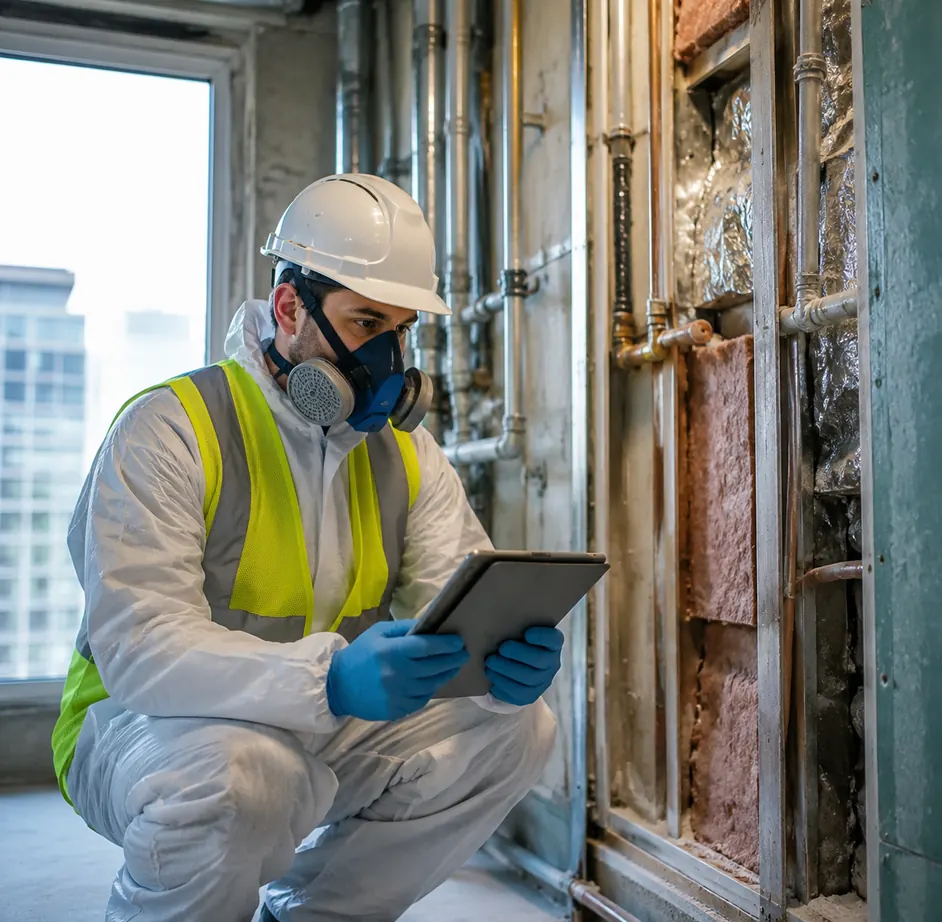
Testing and verification are separate from the contractor whose work we verify.
Why choose Balco Environmental
Local experts. Professional. Focused on your safety.
Balco provides professional environmental testing and inspection across Vancouver. Our role is to identify, sample, document and explain, without turning the findings into a removal sales pitch.
Local and responsive
A Lower Mainland team that understands municipal permit workflows and contractor schedules.
Professional and thorough
Testing decisions stay separate from any hazardous material removal contract.
Trained professional
Inspection, sampling and reporting are completed by personnel qualified for the project decision.
Clear communication
Plain-language reports that owners, permit reviewers and contractors can use.
Need a hazmat survey?
Tell us the property, project scope and schedule. We will explain the right next step for Vancouver.
What the service covers
Hazmat Surveys with a complete scope.
Applicable WorkSafeBC requirements cover more than asbestos, and took effect in their current hazardous-material identification form on February 1, 2015. The survey scope follows the building, work area and materials that the renovation or demolition will disturb.
Asbestos
Bulk sampling of suspect pre-1990 materials, including compounds, flooring, insulation and cement products.
Lead
Paint, coatings and dust assessed where the building age and planned work create an exposure concern.
Mold
Surface and air sampling where water damage, visible growth or renovation exposure requires confirmation.
Mercury
Thermostats, switches, lamps and older components identified within the planned work area.
PCBs
Fluorescent ballasts, electrical equipment and other legacy components considered under the survey scope.
Silica
Concrete, masonry, tile and drywall flagged so contractors can plan the correct dust controls before cutting.
Building conditions in Vancouver
Know the building. Know the hazards. Test before disturbance.
Vancouver's pre-1950 character homes carry the oldest hazards, including plaster and stucco wall systems, friable pipe and boiler insulation, vermiculite attic fill and asbestos cement siding. Later mid-century renovations layered in drywall joint compound, textured ceilings and 9 by 9 inch vinyl tile, so a single old house can hold several eras of asbestos-containing material.
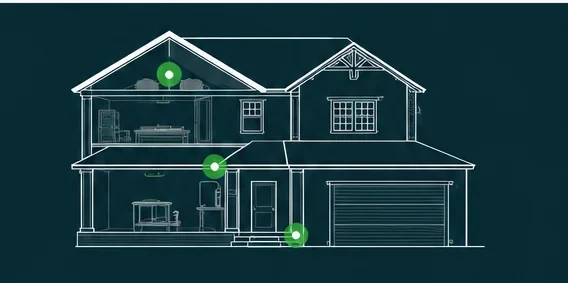
Pre 1980s
High risk
Greatest chance of hazardous materials across most building components.
- Popcorn ceilings
- Vinyl floor tiles and black mastic
- Drywall joint compound
- Vermiculite attic insulation
- Pipe and duct wrap
1980s to 1990s
Moderate risk
Some hazardous materials still common in specific building materials.
- Drywall joint compound
- Sheet flooring
- Furnace insulation
- Roofing felt
- Window putty
1990s to 2000s
Lower risk
Use of asbestos declined but suspect materials still turn up.
- Some vinyl products
- Older fixtures
- Legacy insulation
- Test before you disturb
2000s and Newer
Low risk
Modern standards reduced asbestos, but other hazards remain.
- Asbestos largely phased out
- Lead, mercury or PCBs still possible
- Survey if materials are of unknown age
Our process
From inspection to permit-ready report. No guesswork.
Balco confirms the project scope, inspects the affected areas, collects representative samples, coordinates third-party laboratory analysis and delivers a clear written survey.
- 1
Site walk and inventory
A qualified surveyor walks the property, identifies every suspect material, and maps location and quantity.
- 2
Sampling
We collect bulk samples, and air samples where needed, following WorkSafeBC practice. Homeowner-collected samples are not accepted.
- 3
Accredited lab analysis
Samples go to an appropriately accredited third-party laboratory, with standard turnaround of 1 to 2 business days and rush service available.
- 4
Reporting and recommendations
You receive a written report of what was found, quantity, location and risk class. It also gives the reference any WorkSafeBC Notice of Project must cite.
Your testing and report package
Clear findings. Practical next steps. Ready for the next decision.
The finished hazmat survey report identifies each sampled material, location, result and risk classification so your permit reviewer and contractor can plan the work correctly.
Documented findings
Materials, sample locations, estimated quantities and risk classifications are clearly recorded.
Compliance ready
The report is structured for the applicable WorkSafeBC and municipal project requirements.
Fast turnaround
Third-party laboratory results are commonly available in 1 to 2 business days, with rush options when available.
Digital delivery
A clear report package is delivered for the owner, permit reviewer and project contractor.

Most third-party laboratory results are delivered in 1 to 2 business days, with rush options where available.
Vancouver permit and WorkSafeBC compliance
Meet permit and WorkSafeBC requirements. Plan it correctly.
For buildings constructed in 1990 or earlier, the City of Vancouver requires a Salvage and Abatement permit to be issued and completed before it will issue the Demolition permit, and the hazardous materials survey report prepared by a trained professional is the foundation of that Salvage and Abatement application.
The identification, removal and disposal of hazardous materials must be overseen by a Qualified Professional who holds a valid WorkSafeBC Asbestos Level S certification.
Since November 29, 2021 the Qualified Professional must electronically sign and seal the hazardous materials documentation submitted through the City's permitting system.
Homes built before 1950 fall under Green Demolition Bylaw No. 11023, which requires 75% of materials by weight to be reused or recycled, rising to 90% for a pre-1950 character home, backed by a refundable $15,310 deposit. Because hazardous materials must be removed before that recycling count begins, a hazardous materials survey comes first on nearly every older Vancouver teardown.
- Identify before work starts
- Use a trained professional
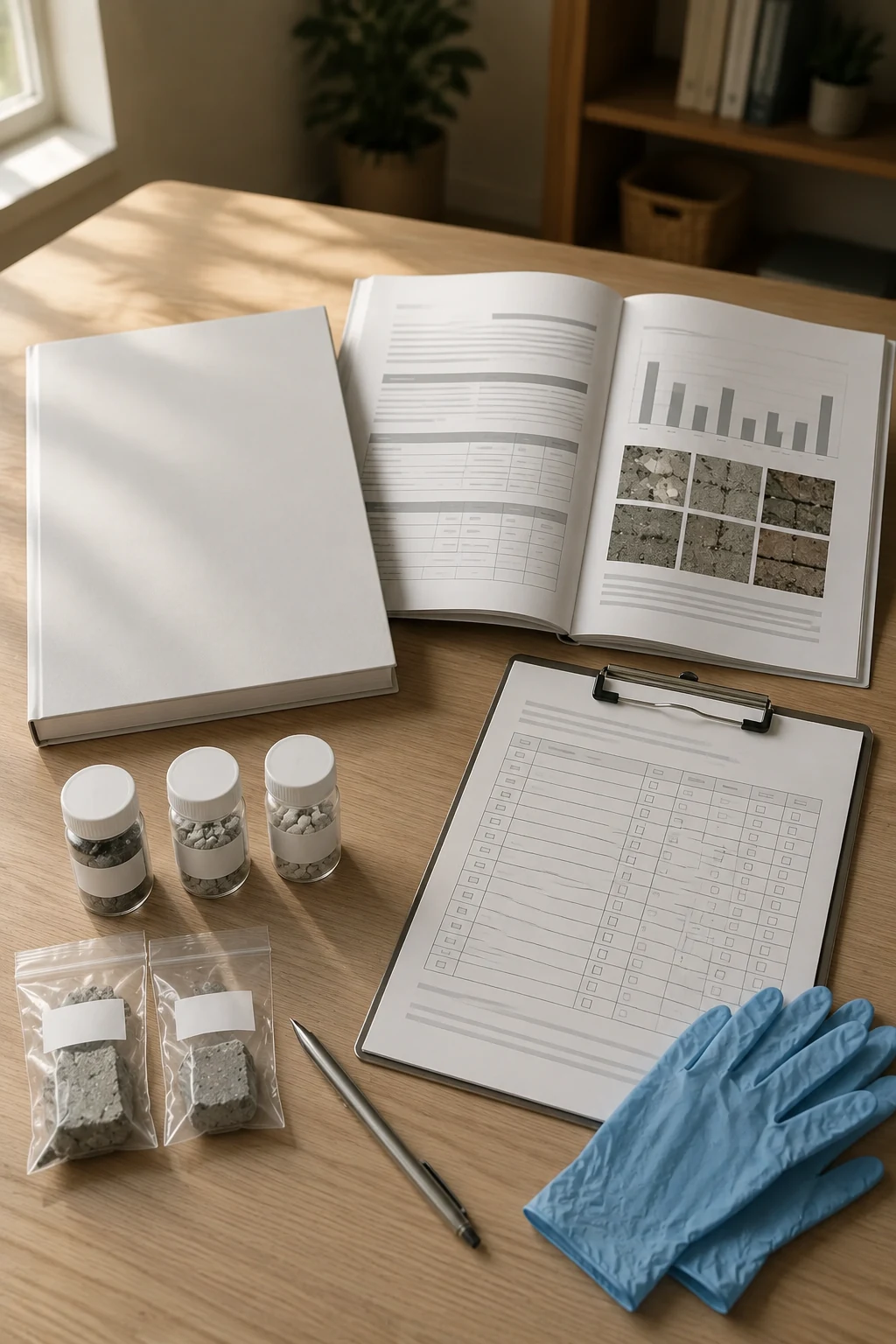
Our third-party guarantee
Professional. Thorough. Always on your side.
Balco's hazmat survey work is separate from the contractor whose work we verify. We inspect, sample and report so owners and contractors in Vancouver can choose the next provider with clear information.
Professional and thorough
The testing decision is separate from the contractor whose work we verify.
Focused on testing
The service is built around accurate inspection, sampling and clear reporting.
Useful project guidance
Findings are explained so the owner and contractor can make informed next-step decisions.
Defensible documentation
Traceable records support permit, abatement and property-management decisions.
Our promise
Our testing decision is separate from the contractor whose work we verify.
We use third-party laboratory analysis and traceable sampling records.
We explain the findings in plain language for the decision at hand.
Serving Vancouver
Local hazmat survey. Professional local service.
We serve Vancouver neighbourhoods including Kitsilano, Mount Pleasant, Grandview-Woodland, Kensington-Cedar Cottage, Renfrew-Collingwood, Dunbar-Southlands, Kerrisdale, Marpole. Roughly 20 percent of Vancouver homes were built before 1961 and over half of the city's housing predates 1990, putting most of the stock in the WorkSafeBC survey-required band. The oldest layer is the pre-1950 character-home stock in neighbourhoods like Kitsilano, Grandview-Woodland, Strathcona and Shaughnessy, which the City's Green Demolition Bylaw specifically targets.
Lower Mainland knowledge
Local scheduling and familiarity with municipal permit requirements across the region.
Prompt scheduling
Reliable on-site appointments and coordinated third-party laboratory turnaround.
Project-ready reporting
Reports organized for owner, contractor, WorkSafeBC and permit review.
Homeowners and professionals
Clear service for homeowners, contractors, strata and property managers.
FAQ
Hazmat Surveys: clear answers.
Direct answers about hazmat survey, reporting, timing and compliance in Vancouver.
Yes. For buildings built in 1990 or earlier, Vancouver requires a Salvage and Abatement permit before it will issue the Demolition permit, and the hazardous materials survey by a trained professional is the foundation of that application. The hazardous materials work must be overseen by a Qualified Professional holding a valid WorkSafeBC Asbestos Level S certification.
Related services
More testing. More clarity. One professional team.
Related testing, survey and clearance services and resources.
Hazmat Surveys
A full pre-demolition survey of every suspect material, mapped and quantified for your permit application.
Learn MoreAsbestos Testing
Bulk sampling of the specific materials a renovation will disturb, with accredited lab results in 1 to 2 business days.
Learn MoreClearance Testing
Post-abatement air clearance so the space can be signed off and handed back with confidence.
Learn MoreClearance Letters
The written clearance record municipalities and insurers ask for, issued separately from whoever did the removal.
Learn MoreFurther reading
Before your survey
Two questions come up on nearly every pre-demolition survey, and both have straight answers.
Ready to get started?
Book hazmat survey with Balco.
Professional pre-renovation and pre-demolition hazmat surveys in Vancouver. Clear reports with third-party laboratory results in 1 to 2 business days. Call 604-623-3464 or send your project details for an itemized quote.
Third-party laboratory results commonly available in 1 to 2 business days.
Trained-professional service built around WorkSafeBC requirements.
Surveyors and technicians serving Vancouver and the Lower Mainland.
Get a Hazmat Survey Quote
Tell us the property, project scope and schedule. We will reply with the right service and earliest available appointment.